Makgadikgadi Pans & Central Kalahari Safari Guide
The Makgadikgadi Pans are the remnants of an ancient super-lake — Lake Makgadikgadi — that once covered an area larger than Switzerland. Today, two vast salt pans — Ntwetwe Pan and Sua Pan — extend across approximately 12,000 square kilometres of the Kalahari, creating one of the largest salt flats in the world and one of Africa's most surreal and otherworldly landscapes. During the dry winter months (May-October), the pans are blindingly white, cracked expanses stretching to the horizon, where the sky and earth merge in a shimmering mirage. The transformation begins with the summer rains. From November to April, shallow waters fill the pans, attracting one of Africa's last great zebra migrations — approximately 25,000 Burchell's zebra trek from the Boteti River to the nutritious grasslands that sprout on the pans' edges. This gathering also attracts wildebeest, springbok, and their predators including lion, cheetah, and brown hyena. When conditions are right, breeding colonies of greater and lesser flamingos appear on Sua Pan, their pink masses reflected in the shallow water against the white salt backdrop. The Makgadikgadi experience is unlike any other in Africa. Quad bike excursions across the pans, sleep-outs under the Milky Way on the salt flats, meerkat habituation experiences at Jack's Camp, and interactions with the San Bushmen — one of the world's oldest continuous cultures — add dimensions of adventure and cultural depth. Chapman's Baobab, one of the oldest and most famous trees in Africa, stands on the edge of the pans, while the Kubu Island granite outcrop, sacred to the San, is strewn with ancient stone tools and offers panoramic views across the salt expanse.
Wildlife & Ecosystems
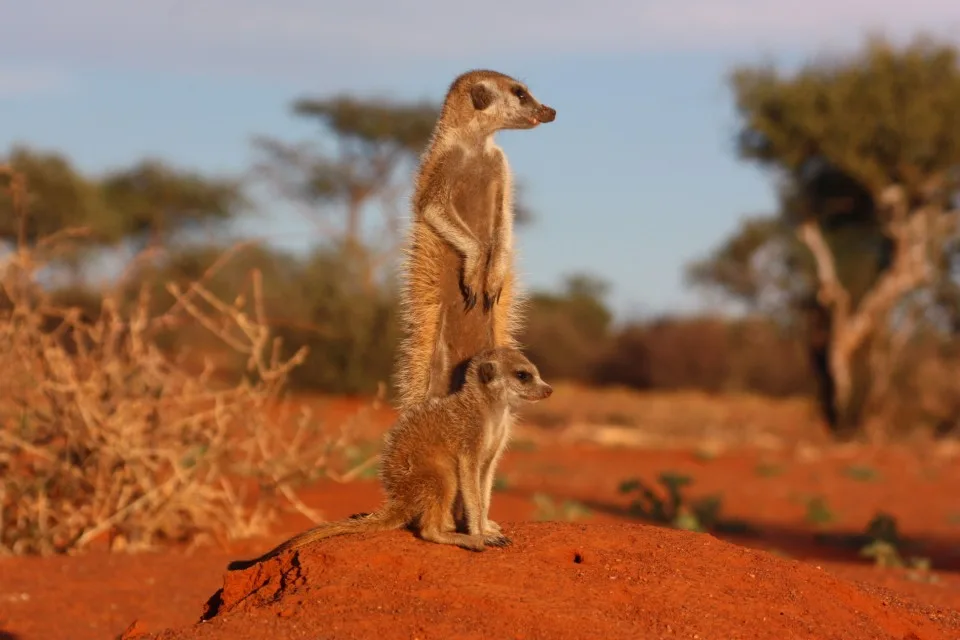
25, 000 zebra and wildebeest migrate through Makgadikgadi (Africa's second-largest migration). Ntwetwe and Sua Pans host up to 50, 000 lesser flamingos during wet season breeding. Meerkats habituated to humans at Jack's Camp and Camp Kalahari. Central Kalahari supports Kalahari black-maned lion, brown hyena, cheetah, gemsbok, springbok, and the endangered wild dog.
Best Time to Visit
November to April (green season) for Makgadikgadi's zebra migration (25,000 animals) and flamingo breeding on Sua Pan. May to October dry season for Central Kalahari predator viewing as wildlife concentrates in the Deception Valley system.
Getting to Makgadikgadi Pans & Central Kalahari
Maun Airport (1-hour flight to pans airstrips). Self-drive from Maun: 300 km east to Makgadikgadi (4 hours). Nata town on the pans' eastern edge. Central Kalahari: charter flight from Maun to Deception Valley airstrip (45 minutes) or self-drive from Ghanzi (west) or Maun (north). 4x4 essential for all pans and Kalahari travel.
Areas We Cover
Ntwetwe Pan
Ntwetwe Pan is the western salt pan of the Makgadikgadi system, covering approximately 4,500 square kilometres. Jack's Camp and San Camp — legendary luxury tented camps operated since the 1960s — sit on the pan's western fringe at the Boteti River edge. Habituated meerkat colonies near the camps allow extraordinarily close encounters as the animals climb onto visitors' heads for warmth at sunrise. Quad-biking across the endless white salt flats and sleeping under the stars on the pan are bucket-list experiences.
Sua Pan & Nata Sanctuary
Sua Pan is the eastern salt pan covering approximately 3,400 square kilometres, notable for Kubu Island — a granite outcrop sacred to the San people, covered in ancient baobabs and declared a national monument. Nata Bird Sanctuary (230 km²) on Sua Pan's northern shore is a critical breeding site for greater and lesser flamingos — up to 50,000 birds form a spectacular pink haze when rains fill the pan between November and March.
Central Kalahari Game Reserve
The Central Kalahari Game Reserve covers 52,800 square kilometres — the world's second-largest protected area and larger than Switzerland. Established in 1961 to protect the San Bushmen's traditional hunting grounds, the reserve's Deception Valley (named by explorer Mark Owens) concentrates predators during the dry season. The fossil river valleys support gemsbok, springbok, brown hyena, and the legendary Kalahari black-maned lions — the dark-maned males are among Africa's most photogenic predators.