Ngorongoro Conservation Area Safari Guide
The Ngorongoro Conservation Area encompasses the world's largest intact volcanic caldera — a 260-square-kilometre natural amphitheatre that serves as a permanent home to over 25,000 large animals. The crater floor, 600 metres below the forested rim, is one of the few places in Africa where all Big Five can be seen in a single morning game drive. Black rhino graze the open grassland, lion prides dominate the central plains, and flamingos paint the soda lakes pink. For golfers, the Ngorongoro Highlands offer cool-climate courses with staggering Rift Valley views, and the crater itself provides the most concentrated wildlife experience available as a complement to championship golf on the Serengeti.
Wildlife & Ecosystems
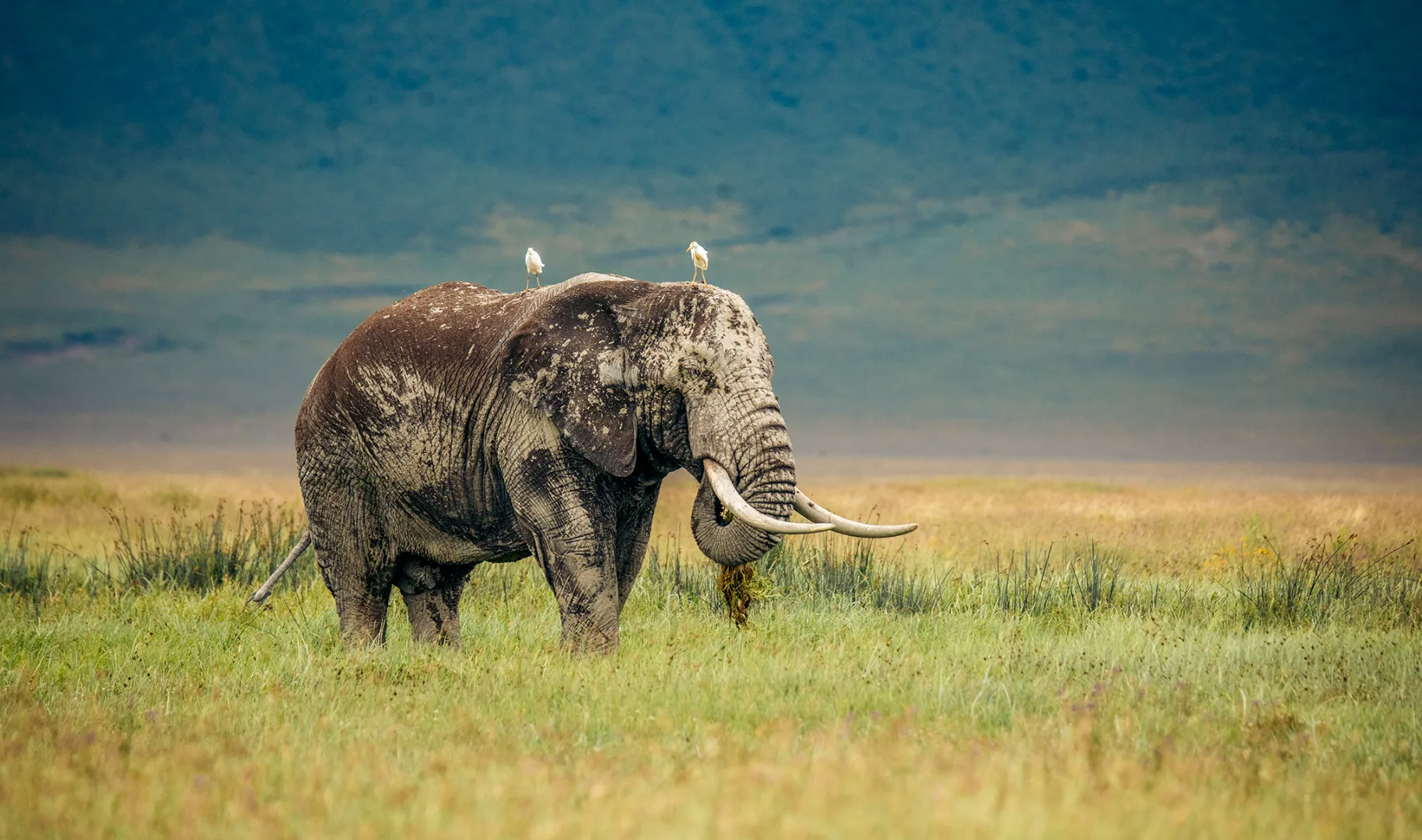
The crater supports one of the densest concentrations of wildlife in Africa: an estimated 25, 000 large animals including black rhino (critically endangered), lion, elephant, buffalo, leopard, hippo, flamingos, and over 500 bird species. Unlike the Serengeti, the crater population is largely resident year-round.
Best Time to Visit
Year-round destination. June to October is driest with clear crater views. December to March offers warmer weather and the best chance of seeing newborn animals. The crater floor can be chilly in the early morning year-round — temperatures drop to 10-15 degrees Celsius at dawn.
Getting to Ngorongoro Conservation Area
3-4 hours by road from Arusha via the scenic Rift Valley escarpment. Charter flights can land at Lake Manyara airstrip (45 minutes from the crater). Most Serengeti Safari + Golf packages include Ngorongoro as a road-transfer stop between Arusha and the Serengeti.
Areas We Cover
Ngorongoro Crater
The 260-square-kilometre caldera floor is a self-contained ecosystem where black rhino, lion, elephant, buffalo, and flamingos coexist in extraordinary density. Game drives descend 600 metres from the rim to the floor, where a full morning reveals more wildlife than most parks offer in a week.
Ngorongoro Crater
The Ngorongoro Crater floor is a 264-square-kilometre natural arena that provides what many consider the single most reliable Big Five game-viewing experience in Africa. Descending the steep crater wall via one of two access roads, visitors enter a self-contained ecosystem where approximately 25,000 large mammals reside permanently, drawn by the crater's year-round water supply from springs, swamps, and the central alkaline Lake Magadi. Game drives typically follow a circuit around the floor, passing through open grassland, acacia forest, freshwater marshes, and the lakeshore. Lion prides in the crater are among the most densely concentrated in Africa — roughly 62 individuals patrol territories across the open floor, highly visible against the cropped grass. The crater's black rhino population of approximately 55 is one of the most accessible in East Africa, often spotted grazing on the Lerai Forest fringe. During the wet months, Lake Magadi attracts dense flocks of lesser flamingos whose pink masses contrast starkly with the green crater walls. Hippo pools, hyena dens, and elephant bulls traversing the Lerai Forest complete a game-drive loop that consistently ranks as one of Africa's finest wildlife experiences.
Olduvai Gorge
The 'Cradle of Mankind' — where Louis and Mary Leakey discovered some of the earliest human fossils. The on-site museum tells the story of human evolution stretching back 1.8 million years. Located between Ngorongoro and the Serengeti, it is a natural stop on the transfer between the two.
Empakaai Crater
Empakaai Crater is a smaller volcanic caldera 6 kilometres in diameter, with a deep soda lake covering most of its floor. A guided hike (with an armed ranger) descends 300 metres from the forested rim to the lake shore, passing through montane forest inhabited by buffalo, bushbuck, and blue monkeys. On clear days, the crater rim offers views of both Ol Doinyo Lengai — Africa's only active carbonatite volcano — and distant Kilimanjaro.
Ngorongoro Conservation Area in Pictures